
A Fight for Jobs, Students, and a National Asset
Introduction: A World-Class Institution Under Threat
The proposal by Cambridge University management to effectively close its Department of Veterinary Medicine—ranked by the Times Higher Education Supplement as the best undergraduate veterinary course in the world—represents a critical threat not only to its staff and students but to the entire public education sector. This is not merely an internal university matter. It is a fight for skilled jobs, for the integrity of our educational institutions against the encroachment of privatisation, and for the preservation of a vital national resource essential to the UK’s public health and workforce resilience.
In response to this alarming development, a powerful coalition has formed. The “Save the Veterinary School” campaign, a joint effort by trade unions including UNITE, the University and College Union (UCU), and Unison, has been launched to challenge this flawed and damaging process. This report will outline the university’s shocking proposal, detail its devastating potential impact, and describe the collective union response mobilised to defend this world-class department.
——————————————————————————–
1. The University’s “Bolt from the Blue” Proposal
Understanding the university’s proposal requires acknowledging the opaque and abrupt manner in which it was delivered. The lack of transparency and proper consultation has left dedicated staff and committed students to grapple with what they have rightfully called a “hasty, unjustified and flawed process.” This approach, seemingly without a clear and compelling justification, has become a major point of contention and is an insult to the shared governance that should define a leading academic institution.
The recommendation, put forward by the School of the Biological Sciences, presents the University’s General Board with several drastic options for the future of the veterinary course. These options, which would fundamentally dismantle the department as it currently exists, include:
- Transferring students to another institution to complete their clinical years.
- Fulfilling teaching requirements through partnerships with external “private sector” providers.
- Closing admissions to new entrants from 2026, which would lead to a full closure of the veterinary school by 2032.
For the staff and students who have dedicated their careers and studies to the department, the recommendation came as "a bolt from the blue." In a testament to the flawed nature of the process, the university body that made the recommendation was reportedly unable to provide a "clear and compelling justification" when questioned directly by those affected.
This sudden and poorly rationalised proposal has immediate and severe consequences, not just for the individuals involved, but for the nation as a whole.
——————————————————————————–
2. The Human and National Cost of Closure
The potential closure of the Cambridge Veterinary School is a decision whose impact would ripple far beyond the university’s historic walls. It threatens the livelihoods of skilled professionals, disrupts the education of the next generation of vets, and weakens the UK’s capacity to handle future public health crises and address a critical national skills shortage.
Jobs and Students at Risk
The direct human cost of the proposal is staggering. The proposed actions put "over 160 jobs at risk," creating what union leaders have described as "tremendous stress for staff and extreme anxiety for hundreds of current and future students." This uncertainty jeopardises the careers of dedicated educators, researchers, and support staff while leaving students deeply concerned about their future employability and the continuity of their world-class education.
A “National Mistake”
The broader implications for the United Kingdom are equally severe. The country already faces a recognised shortage of vets, and with the majority of Cambridge graduates going on to work in the UK, this closure would exacerbate a national problem. It is for this reason that the British Veterinary Union in Unite has rightly called the potential closure a "national mistake". This view is echoed across the sector, with the British Veterinary Association (BVA) calling the news “deeply worrying” and highlighting the “crucial role that Cambridge plays in creating a resilient veterinary workforce.”
Furthermore, at a time when the threat of zoonotic diseases is a global concern, this decision is dangerously short-sighted. Vets and researchers with world-class knowledge of animal-to-human disease transmission are of vital importance in preventing the next pandemic. To dismantle a leading centre of such expertise is a risk the country cannot afford to take.
——————————————————————————–
3. Deconstructing the University’s Rationale
While the university’s justifications remain unclear, concerns over finances and accreditation have been cited. However, a closer examination reveals these arguments to be weak and unconvincing, particularly when contrasted with evidence of the department’s significant progress and the university’s apparent prioritisation of profit over its educational mission.
- Accreditation Concerns The university’s reasoning appears to lean on a past critique from the Royal College of Veterinary Surgeons (RCVS), which found the department was failing to meet 50 out of 77 of its accreditation standards. However, using this as a pretext for closure is a profound betrayal of the department’s subsequent efforts. Staff and management took the issues
"extremely seriously,"made"huge improvements,"and satisfied the RCVS that most required changes had already occurred. In recognition of this remarkable turnaround, the RCVS extended “conditional accreditation” for another year. The accrediting body itself acknowledged"the considerable efforts the department staff had made to make improvements in a relatively short timeframe"and expressed their hope that the department’s"current trajectory"towards full accreditation would continue. This heroic effort should have been met with investment, not the threat of closure. - Financial Sustainability The course has been cited as running a
"recurrent deficit of more than £1M."While any deficit requires management, the joint union statement places this figure in the context of a university that appears to be prioritising"profit-seeking"principles over academic excellence. The consideration of outsourcing teaching to external, private-sector providers is a clear indication of this disturbing trend. It suggests the decision is less about a modest deficit in a world-leading department and more about a move towards a privatised, profit-driven model of education.
The university’s flawed and incomplete rationale has rightly been met with a strong, organised, and collective response from the campus trade unions.
——————————————————————————–
4. Union Mobilisation: A United Front to Save the Vet School
In the face of unilateral and damaging decisions by university management, collective action and union solidarity are our most powerful tools. The coordinated response from UNITE, Unison, and UCU demonstrates a united front determined to hold the university accountable and protect this vital educational asset for the benefit of all.
The union coalition has taken several decisive actions to build a powerful campaign:
- Launching the “Save the Veterinary School” campaign, which includes a public open letter urging the university to reverse its course.
- A formal vote by the UCU to enter into dispute with the University if the General Board decides to pause the veterinary course.
- Organising a mass rally on March 4th 2025 outside Great St. Mary’s Church, which, as powerfully captured in the accompanying photograph, brought together a large and vocal crowd of staff and students to demonstrate the scale of opposition.
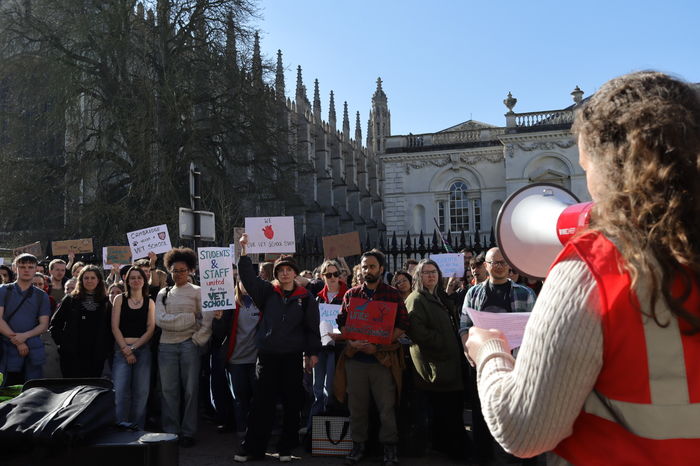
The core demands of the unions are clear, constructive, and focused on a sustainable future for the department. We are calling on the university to allow continued undergraduate admission and to reject closure in favour of a strategy centred on "financial investment in facilities and staffing." This is the only path that will ensure the maintenance of the department’s world-class teaching and its return to full accreditation.
The fight to save the Cambridge Veterinary School is a fight for the future of public education. UNITE urges all its members in the education sector and beyond to support this vital campaign, share the open letter, and stand in solidarity with the dedicated staff and students on the front line of this struggle. Their victory will be a victory for us all.